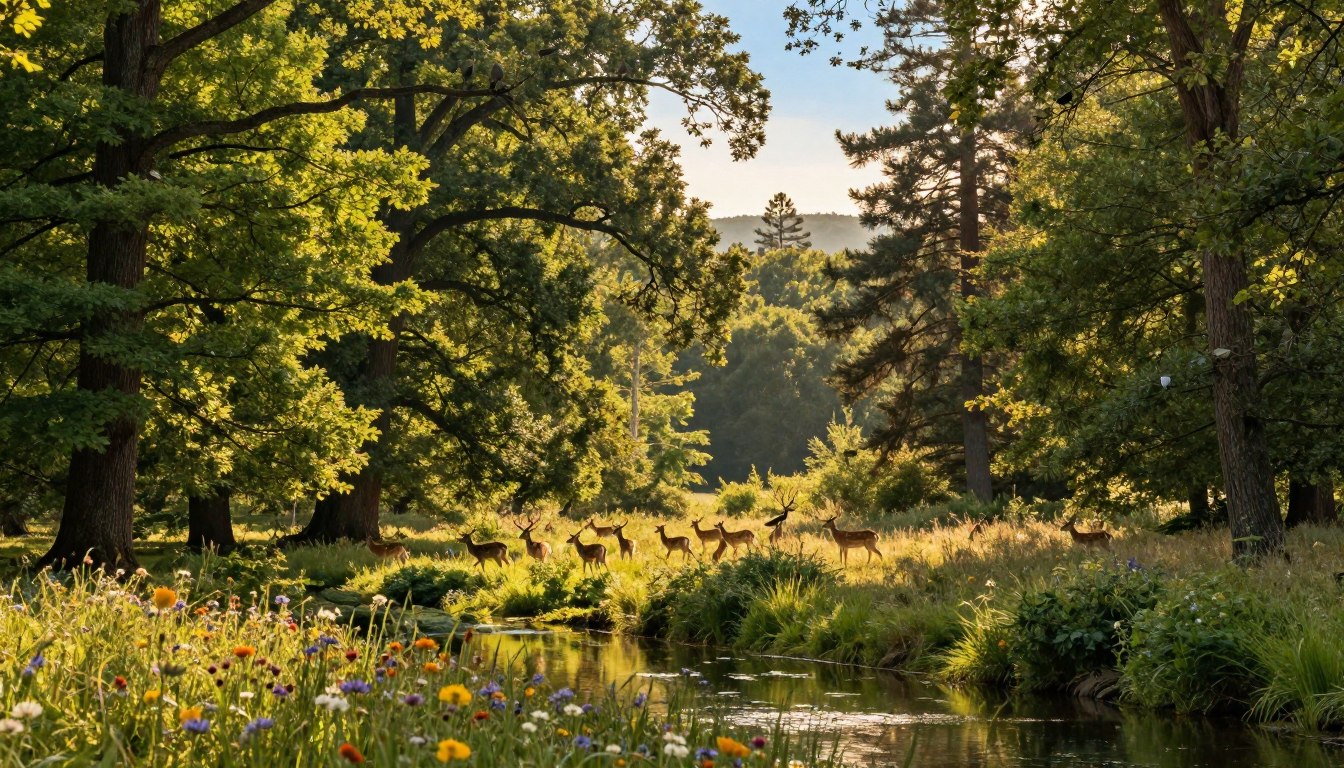
Have you ever wondered what it feels like to truly disconnect from the digital noise and step into a living, breathing sanctuary? As I walk into a forest full of trees and wildlife, I am immediately enveloped in a world teeming with hidden energy.
The air vibrates with the melodic chirping of birds, while the gentle rustling leaves create a soothing rhythm. I inhale the crisp scent of wildflowers, feeling my stress melt away with every breath.

Key Takeaways
- Connecting with nature significantly lowers stress levels and improves mental clarity.
- Walking through diverse ecosystems helps us appreciate the complexity of our planet.
- Every living organism plays a crucial role in maintaining the health of the environment.
- Sensory experiences in nature can help ground your thoughts and emotions.
- Becoming an active observer fosters a deeper respect for the natural world.
Stepping Into a Forest Full of Trees and Wildlife
Entering the forest is like stepping into a different world. The transition from the outside environment to the inside of the forest is almost palpable.
The Sensory Experience of Entering the Woods
As I step into the forest, the dense forest canopy above me filters the sunlight, casting dappled shadows on the forest floor. The air is cool and damp, filled with the scent of damp earth and decaying leaves.
The sounds of the outside world fade away, replaced by the rustling of leaves and the chirping of birds. The forest floor, covered with a layer of leaves and ferns, provides a soft cushion underfoot.

The earthy aroma and the chorus of forest sounds create a multisensory experience that is both calming and invigorating.
Finding Solitude Among the Ancient Giants
I feel a sense of solitude wash over me as I walk among the ancient giants, their towering trunks a testament to the age and resilience of this woodland ecosystem.
The vibrant ecosystem is teeming with life, and I am struck by the intricate relationships between the trees, the creatures that inhabit them, and the microorganisms that sustain them.
As I continue my journey into the forest, I become more aware of the interconnectedness of all living things within this ecosystem. The forest is not just a collection of trees; it is a complex, thriving entity that supports a vast array of plant and animal life.
Exploring the Complex Woodland Ecosystem
As I venture deeper into the forest, I start to uncover the intricate dynamics of the woodland ecosystem. The forest is more than just a collection of trees; it’s a vibrant, interconnected system where every component plays a vital role.
The complexity of this ecosystem becomes apparent when I consider the various layers that make up the forest. One of the most critical components is the dense forest canopy.
Understanding the Dense Forest Canopy
The forest canopy is the upper layer of the forest, consisting of the tops of trees and the leaves that filter sunlight. This layer is crucial for the overall health of the ecosystem.
How Sunlight Filters Through the Leaves
Sunlight filtering through the leaves is a critical process that affects the entire forest. The canopy acts as a natural filter, allowing some sunlight to pass through while blocking other parts. This process supports the growth of plants and trees in the understory.
The way sunlight filters through can vary greatly depending on the density of the canopy and the types of trees present. For example, deciduous trees allow more sunlight to pass through during certain times of the year when they lose their leaves.
The Role of the Understory in Supporting Life
The understory, the layer beneath the canopy, is home to a variety of plant and animal life. This layer is supported by the filtered sunlight and the microclimate created by the canopy.
The understory plays a crucial role in supporting the life that thrives in the forest. It provides shelter and food for numerous species, from small mammals to insects and birds.

The Importance of Diverse Flora and Fauna
The forest is home to a diverse array of flora and fauna, each playing a vital role in maintaining the balance of the ecosystem. The variety of plant species supports a wide range of wildlife, from herbivores to carnivores.
The diverse flora and fauna are intricately linked, with each species contributing to the overall health of the natural habitat. For instance, certain plants provide food for specific animals, while these animals help in seed dispersal and nutrient cycling.
- The presence of diverse flora supports a complex food web.
- Fauna helps in maintaining the balance of the ecosystem through processes like pollination and seed dispersal.
- The variety of species ensures the resilience of the ecosystem to changes and disturbances.
By appreciating the complexity and interconnectedness of the woodland ecosystem, I gain a deeper understanding of the importance of preserving this natural habitat for future generations.
Observing a Thriving Wildlife Sanctuary
As I venture into the heart of this thriving wildlife sanctuary, I’m immediately enveloped by the sights and sounds of a biodiverse forest. The air is filled with the songs of birds, and the rustling of leaves signals the presence of hidden creatures.
Tracking Signs of Local Inhabitants
The forest floor is a canvas that tells the story of its inhabitants. By examining the terrain, I can identify signs of local wildlife, such as footprints, scat, and feeding grounds.
Identifying Bird Calls and Animal Tracks
One of the most fascinating aspects of exploring this sanctuary is learning to identify the various bird calls and animal tracks. For instance, the distinctive call of the American Robin is a common sound, while the tracks of a white-tailed deer are often seen along the forest paths.
| Animal | Track Characteristics | Habitat |
|---|---|---|
| White-tailed Deer | Hoof prints, typically 2-3 inches long | Woodland edges, meadows |
| Raccoon | Hand-like prints with five toes | Forests, near water sources |
| Wild Turkey | Large, three-toed prints | Woodlands, fields |
Respecting the Natural Habitat
As I observe the wildlife, it’s crucial to respect their natural habitat. This means following best practices that minimize my impact on the environment.
Best Practices for Ethical Wildlife Observation
To ensure that my presence does not disrupt the delicate balance of this ecosystem, I adhere to guidelines such as keeping a safe distance, not feeding the wildlife, and staying on designated trails.
- Keep a safe distance from wildlife to avoid stressing them.
- Refrain from feeding wildlife, as it can alter their natural behavior.
- Stay on designated trails to minimize habitat disruption.
“The clearest way into the Universe is through a forest wilderness.”
By embracing these practices, I can enjoy the beauty of this thriving wildlife sanctuary while preserving its integrity for future generations.
Conclusion
As I reflect on my journey through a forest full of trees and wildlife, I am struck by the serene beauty and intricate complexity of this vibrant ecosystem. The experience has been a poignant reminder of the importance of preserving our natural world.
Walking through the lush greenery, I have come to appreciate the delicate balance that sustains this ecosystem. The diverse life forms and the ancient trees have left a lasting impression, inspiring a deeper connection with nature.
My time in the forest has been a journey of discovery, filled with a sense of wonder and awe. I am filled with a sense of peace, knowing that this vibrant ecosystem will continue to thrive, supporting a rich variety of life for generations to come.
FAQ
Why do I find a forest full of trees and wildlife so rejuvenating for my spirit?
When I step into a forest full of trees and wildlife, I am immediately enveloped by the lush greenery and the calming scents of the earth. The sensory experience of a vibrant ecosystem—from the rustling leaves to the distant bird calls—helps me disconnect from the stresses of modern life. Scientific studies often shared by the National Park Service suggest that immersing myself in a biodiverse forest lowers cortisol levels and fosters a profound sense of peace and connection to the world around me.
What exactly makes the dense forest canopy so important to the woodland ecosystem?
In my observations, the dense forest canopy acts as a vital protective layer for the entire woodland ecosystem. It filters the sunlight, creating dappled shadows and maintaining a cool, moist microclimate on the ground. This shelter is essential for the survival of the diverse flora and fauna that live below, as it regulates temperature and provides a unique natural habitat for species that wouldn’t survive in direct, harsh sunlight.
How can I best identify the diverse flora and fauna during my walk?
I’ve found that the best way to truly see the forest is to slow down and stay quiet. I often use field guides from National Geographic or apps like iNaturalist to help me identify specific plants and animal tracks. By paying attention to the different layers of the thriving wildlife sanctuary, from the tiny mosses on the floor to the birds nesting high above, I can better appreciate how every member of this vibrant ecosystem plays a role in its survival.
What are my personal best practices for ethical observation in a natural habitat?
I believe that being a guest in a thriving wildlife sanctuary requires a deep level of respect. I always stick to marked trails to protect the diverse flora and fauna from being stepped on. I also use Nikon binoculars to watch animals from a distance, ensuring I don’t disrupt their natural behaviors or cause them stress. My goal is to leave the biodiverse forest exactly as I found it, ensuring it remains a pristine natural habitat for years to come.
Why is the variety of life in a biodiverse forest so critical?
To me, a biodiverse forest is like a complex machine where every gear must function perfectly. The diverse flora and fauna create a web of life where trees provide oxygen and shelter, insects pollinate the plants, and microorganisms enrich the soil. Without this variety, the woodland ecosystem would become fragile. Seeing this interconnectedness firsthand reminds me that I am part of this intricate web, and it inspires me to advocate for the protection of every vibrant ecosystem I visit.