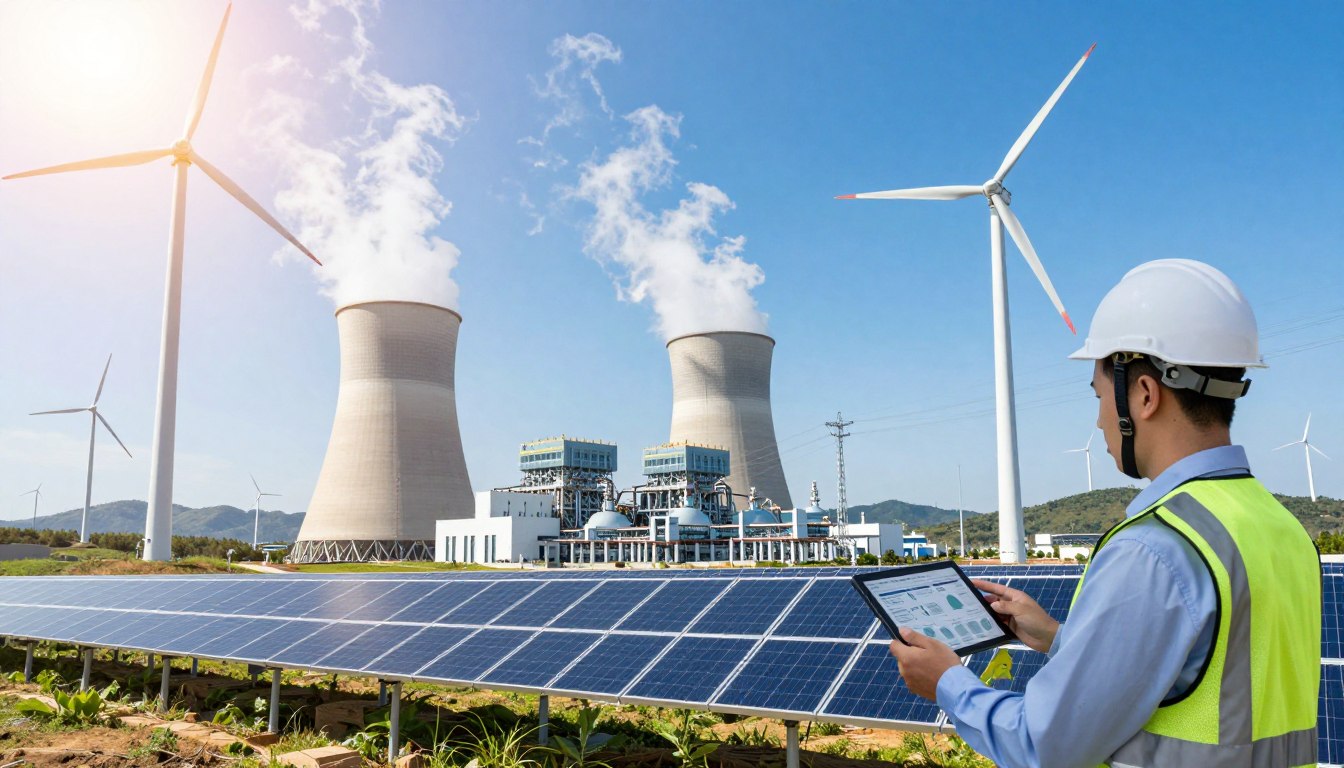
Have you ever paused to consider the silent hum powering your home? Every light switch you flip and device you charge relies on a complex web connecting us to a steady flow of energy. Modern life demands constant reliability, making efficient electricity production a cornerstone of our daily comfort.

Understanding how we capture and distribute this vital resource helps us appreciate the progress made by engineers today. Let us explore the fascinating journey from raw energy sources to the power flowing through your walls.
Key Takeaways
- Reliable energy is essential for maintaining modern living standards.
- Infrastructure development is critical for meeting rising global energy demands.
- Innovation in power systems ensures long-term grid stability.
- Sustainable methods are shaping the future of energy creation.
- Understanding these processes empowers consumers to make informed choices.
Technologies That Can Produce Large Amounts of Electricity
As the demand for electricity continues to rise, technologies that can generate significant electricity are becoming increasingly important. The development and implementation of these technologies are crucial for meeting the world’s growing energy needs.
Advancements in Utility-Scale Solar Arrays
Utility-scale solar arrays have become a significant source of renewable energy. These large solar farms can generate substantial amounts of electricity by harnessing sunlight.
Key benefits of utility-scale solar arrays include:
- High electricity generation capacity
- Reduced greenhouse gas emissions
- Lower operational costs compared to traditional fossil fuel-based power plants
For instance, a typical utility-scale solar farm can produce enough electricity to power thousands of homes. The efficiency of these solar arrays is continually improving with advancements in technology.

The Role of Modern Nuclear Fission and Fusion
Nuclear power remains a vital component of the global energy mix, with modern nuclear fission technology offering a reliable source of electricity. Nuclear fission involves the splitting of atomic nuclei to release energy, which is then used to generate electricity.
Nuclear fusion, on the other hand, is still in the experimental phase but promises to be a game-changer. It involves combining atomic nuclei to release vast amounts of energy with minimal waste and no greenhouse gas emissions during operation.
| Technology | Electricity Generation Capacity | Environmental Impact |
|---|---|---|
| Nuclear Fission | High | Low emissions during operation, but nuclear waste disposal is a concern |
| Nuclear Fusion | Potentially very high | Minimal waste and no emissions during operation |
Harnessing Wind Energy Through Offshore Turbines
Offshore wind turbines are another technology capable of generating significant electricity. By leveraging wind resources over the ocean, these turbines can produce more electricity than their onshore counterparts due to the stronger and more consistent winds.
Advantages of offshore wind turbines include:
- Higher electricity generation capacity
- Less visual impact compared to onshore wind farms
- Potential for installation near coastal areas where energy demand is high
Scaling Infrastructure for Massive Electricity Production
The key to unlocking high electricity output lies in scaling our infrastructure effectively. As the world shifts towards renewable energy sources and increasing electricity demands, the need for a robust and adaptable infrastructure becomes paramount.
Grid modernization is at the forefront of this effort. By upgrading existing grid systems, we can improve efficiency, reduce power losses, and enhance the overall reliability of electricity supply. This involves the integration of advanced technologies such as smart grids and grid-scale energy storage.
Grid Modernization and Smart Transmission Networks
Modernizing the grid involves the adoption of smart transmission networks that can manage complex power flows and predict potential failures. These networks utilize advanced sensors and IoT devices to monitor grid health in real-time, enabling swift responses to changes in demand or supply.

The implementation of smart transmission networks not only improves the efficiency of electricity transmission but also enhances the grid’s resilience to extreme weather events and cyber threats.
Energy Storage Solutions for High-Demand Periods
Energy storage solutions play a critical role in managing high-demand periods. By storing excess energy generated during off-peak hours, these solutions help stabilize the grid and ensure a consistent supply of electricity.
- Advanced battery technologies
- Pumped hydro storage
- Compressed air energy storage
These energy storage solutions are crucial for mitigating the intermittency of renewable energy sources and ensuring a reliable electricity supply.
Integrating Decentralized Power Sources into the Main Grid
The integration of decentralized power sources, such as rooftop solar and community wind farms, into the main grid is another key aspect of scaling infrastructure. This requires advanced grid management systems that can handle two-way power flows and variable generation patterns.
By effectively integrating decentralized power sources, we can reduce transmission losses, enhance energy security, and promote a more democratic energy landscape.
Optimizing Efficiency in High Electricity Output Systems
Efficient electricity generation is pivotal for meeting the world’s growing energy demands, and optimizing high output systems is key to achieving this goal. As the global demand for electricity continues to escalate, the need for systems that can produce powerful electrical output while minimizing waste and reducing operational costs becomes increasingly critical.
The optimization of high electricity output systems involves a multifaceted approach that includes leveraging cutting-edge technologies and innovative strategies. One of the key areas of focus is the implementation of advanced technologies that can enhance the overall efficiency of these systems.
Implementing AI for Predictive Maintenance
The integration of Artificial Intelligence (AI) in predictive maintenance is revolutionizing the way high electricity output systems are managed. AI algorithms can analyze data from various sensors and equipment to predict potential failures, allowing for proactive maintenance that minimizes downtime and optimizes system performance.
- Predictive maintenance reduces the likelihood of unexpected equipment failures.
- AI-driven analysis enables the identification of patterns that may not be apparent through traditional monitoring methods.
- By scheduling maintenance during off-peak periods, the overall efficiency of the system can be maintained.
Reducing Transmission Losses in Long-Distance Power Lines
Transmission losses are a significant concern in the delivery of electricity over long distances. To mitigate these losses, advanced technologies such as high-voltage direct current (HVDC) transmission lines are being employed. These systems offer a more efficient means of transmitting electricity over long distances with reduced energy loss.

The use of advanced materials in the construction of transmission lines also plays a crucial role in minimizing losses. Materials with higher conductivity and durability can significantly reduce the resistance in power lines, thereby enhancing the overall efficiency of the transmission system.
The Impact of Advanced Materials on Generation Capacity
Advanced materials are not only crucial for reducing transmission losses but also for enhancing the generation capacity of electricity production facilities. New materials and technologies are being developed to improve the efficiency of solar panels, wind turbines, and other generation equipment.
- Advanced solar panel materials can increase energy conversion efficiency.
- Lightweight and durable materials are enhancing the performance of wind turbines.
- Innovations in nuclear reactor materials are improving safety and efficiency.
By adopting these advanced materials and technologies, electricity generation facilities can achieve a more efficient electricity generation process, contributing to a more sustainable and reliable energy supply.
Conclusion
As we continue to push the boundaries of electricity production, it’s clear that a combination of innovative technologies and robust infrastructure is crucial for achieving abundant electricity generation.
Technologies such as utility-scale solar arrays, modern nuclear fission and fusion, and offshore wind turbines have emerged as key players in the quest for high-capacity electricity production. Meanwhile, advancements in grid modernization and energy storage solutions are vital for ensuring a stable and efficient supply of electricity.
Optimizing efficiency in high electricity output systems through the use of AI for predictive maintenance and advanced materials has also shown significant promise. As we look to the future, it’s evident that continued innovation and investment in these areas will be essential for meeting growing electricity demands.
With a strong foundation in place, the potential for future advancements in electricity production is vast, paving the way for a brighter, more electrified future with abundant electricity generation.
FAQ
What kind of modern technologies can produce large amounts of electricity reliably?
Today, we rely on several advanced systems for large-scale electricity generation. Utility-scale solar arrays, such as those developed by First Solar, and massive offshore wind farms led by developers like Ørsted, are primary examples. Additionally, traditional and next-generation nuclear plants remain some of the most consistent ways of generating significant electricity to meet global demands.
How does grid modernization contribute to massive electricity production?
For massive electricity production to be effective, the infrastructure must be able to handle the load. By implementing smart transmission networks from companies like Siemens, we can better manage high electricity output from various sources. This modernization ensures that the electricity production process is stable and that power is distributed exactly where it is needed most without overloading the system.
Can renewable energy sources really provide a powerful electrical output for entire cities?
Yes, they certainly can! When we combine technologies like GE Renewable Energy’s Haliade-X turbines with massive battery storage solutions like the Tesla Megapack, we achieve a very powerful electrical output. These systems work together to ensure abundant electricity generation even when the sun isn’t shining or the wind isn’t blowing, making renewables a cornerstone of modern power grids.
What steps are being taken to ensure more efficient electricity generation?
Efficiency is key to maximizing our resources. Industry leaders are now using IBM Maximo and other AI-driven platforms for predictive maintenance, which prevents downtime and ensures efficient electricity generation. Furthermore, using advanced materials in superconductors helps reduce energy loss during transit, which is vital for maintaining a high electricity output over long distances.
Is nuclear fusion the future of abundant electricity generation?
Many experts believe so. Projects like ITER in France and private ventures like Commonwealth Fusion Systems are working toward a future where we can produce large amounts of electricity using the same process that powers the sun. This would provide a virtually limitless and powerful electrical output with minimal environmental impact, revolutionizing the way we think about large-scale electricity generation.
How do energy storage systems help in generating significant electricity?
Storage systems are essential because they act as a buffer. During periods of peak electricity production, systems like NextEra Energy’s storage facilities capture excess power. This stored energy can then be released during high-demand periods, ensuring that the grid maintains a consistent and high electricity output regardless of the time of day.