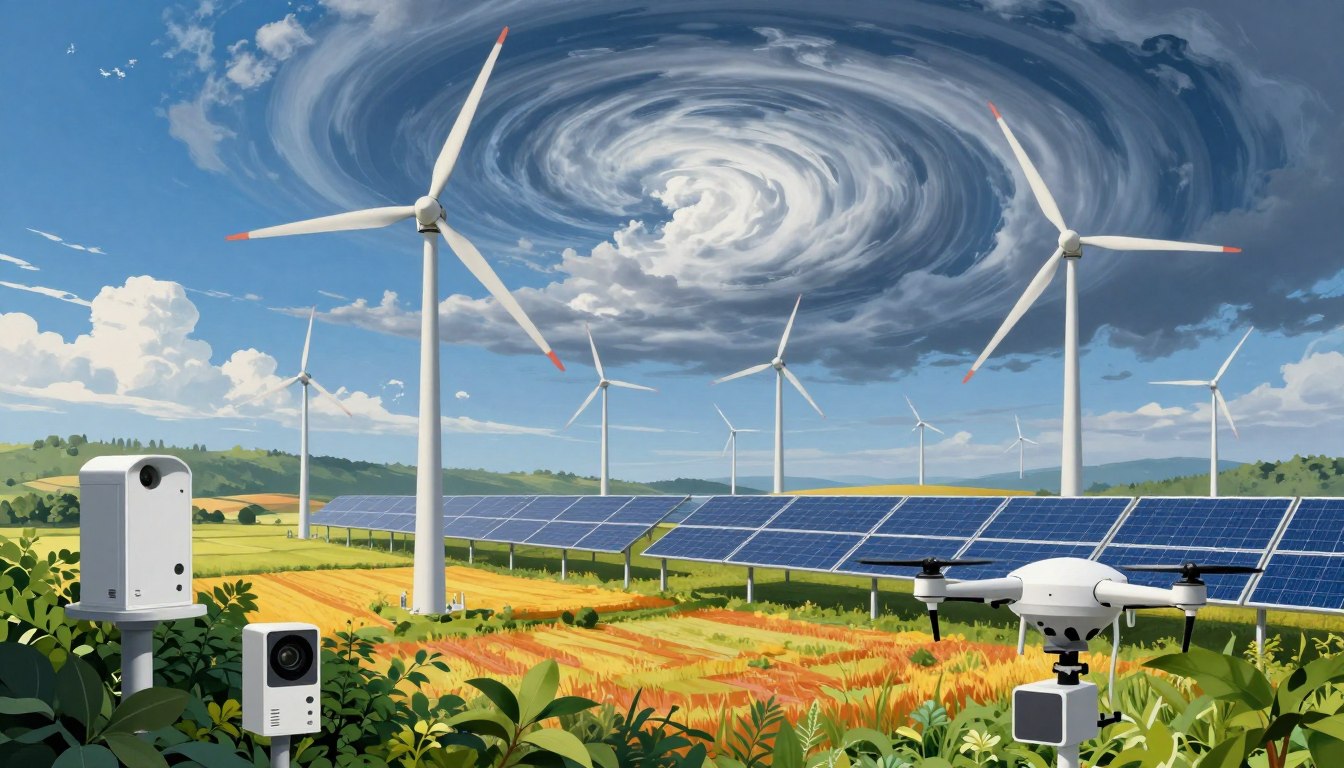
I often look at the sky, wondering about the invisible forces that shape our world. It feels truly remarkable how nature regulates the climate and weather through a delicate, ancient balance. Yet, as our planet faces rapid changes, I find myself searching for deeper answers about our role in this complex dance.

I invite you to join me as we uncover the ethics, challenges, and innovations defining our era. Let us dive into this fascinating topic together to see how we can make a positive impact.
Key Takeaways
- Natural processes maintain a delicate balance in our atmosphere.
- Human innovation plays a growing role in environmental stability.
- Understanding these systems helps us address global warming effectively.
- Ethical considerations are essential when discussing planetary control.
- Collective knowledge empowers us to face future environmental challenges.
The Natural Mechanisms That Regulates the Climate and Weather
Understanding the natural mechanisms that regulate our climate and weather is crucial for appreciating the intricacies of our ecosystem. These mechanisms are multifaceted and interconnected, playing a vital role in maintaining the delicate balance of our environment.
The regulation of climate and weather is influenced by several key factors. One of the primary mechanisms involves the distribution of heat around the globe.
The Role of Ocean Currents in Heat Distribution
Ocean currents play a significant role in distributing heat across the planet. They help in transferring warmth from the equatorial regions towards the poles, thus moderating climate conditions. This process is crucial for maintaining regional climate balances and supporting marine ecosystems.

The thermohaline circulation, a global conveyor belt of ocean currents, is driven by changes in water density due to temperature and salinity. This circulation has a profound impact on regional climates, influencing weather patterns and marine life.
Atmospheric Composition and the Greenhouse Effect
The composition of the Earth’s atmosphere is another critical factor in climate regulation. The greenhouse effect, primarily driven by gases such as carbon dioxide and methane, traps heat from the sun, warming the planet. This natural process is essential for maintaining a habitable climate.
However, human activities have altered the atmospheric composition, enhancing the greenhouse effect and leading to global warming. Understanding the natural balance of the greenhouse effect is vital for developing effective climate control systems.
Solar Radiation and Planetary Albedo
Solar radiation is the primary energy source driving the Earth’s climate system. The amount of solar radiation absorbed by the Earth, as opposed to being reflected back into space, significantly influences our climate. The planetary albedo, or the measure of the Earth’s reflectivity, plays a crucial role in this process.
Variations in solar radiation and changes in the Earth’s surface, such as those caused by deforestation or ice melting, can alter the planetary albedo. These changes, in turn, affect the amount of energy available to the climate system, influencing weather patterns and climate conditions.
By understanding these natural mechanisms, we can better appreciate the complexity of climate regulation and the challenges associated with managing it. Effective environmental management tools and weather control methods can be developed by leveraging our knowledge of these processes.
Human Innovations in Climate Control Systems
In response to the escalating climate crisis, researchers and scientists are turning to innovative technologies to control and regulate the climate. These advancements are crucial in our quest to mitigate the effects of climate change and ensure a sustainable future.
The development of climate control systems involves a multifaceted approach, incorporating various technologies and strategies. One such innovation is cloud seeding and precipitation enhancement, a technique that aims to modify weather patterns to induce precipitation.
Cloud Seeding and Precipitation Enhancement
Cloud seeding involves injecting substances into clouds to enhance precipitation, usually to induce rain or snow. This technique has been used in various parts of the world to alleviate droughts, enhance water supply, and even mitigate the severity of storms. The process typically involves dispersing substances like silver iodide or dry ice into clouds, which then act as cloud condensation nuclei, facilitating the formation of larger ice crystals or raindrops.
The effectiveness of cloud seeding is still a topic of research, with some studies indicating positive outcomes in certain conditions. For instance, a study on cloud seeding in Wyoming found a significant increase in snowfall under specific weather conditions.

Carbon Capture as a Climate Regulation Solution
Another critical innovation in climate control is carbon capture technology. This involves capturing carbon dioxide emissions from power plants and industrial processes, followed by storage or utilization. Carbon capture is seen as a vital strategy for reducing greenhouse gas emissions, which contribute significantly to global warming.
The process of carbon capture involves several steps, including capture, transportation, and storage. Various technologies are being developed to improve the efficiency and reduce the cost of carbon capture. For example, post-combustion capture technology can be retrofitted to existing power plants, making it a potentially viable solution for reducing emissions from existing infrastructure.
Large-Scale Environmental Management Tools
In addition to specific technologies like cloud seeding and carbon capture, large-scale environmental management tools are being developed to regulate the climate. These tools include advanced climate modeling systems, which enable more accurate forecasting and prediction of climate patterns.
These management tools also encompass strategies for managing ecosystems on a large scale, such as reforestation efforts and ocean fertilization. Reforestation, for instance, not only helps in absorbing carbon dioxide from the atmosphere but also contributes to biodiversity conservation.
By leveraging these human innovations in climate control systems, we can potentially mitigate the impacts of climate change. However, it’s crucial to continue researching and assessing the effectiveness and potential consequences of these technologies to ensure they are used responsibly and effectively.
The Ethics and Challenges of Weather Management Technology
Weather management technology is a double-edged sword, offering solutions to climate-related issues while also presenting unforeseen challenges. As we continue to develop and implement these technologies, it’s essential to consider the ethical implications and potential consequences.
The use of weather modification strategies, such as cloud seeding, can have significant effects on local and global climates. While these technologies hold promise for mitigating the impacts of extreme weather events, they also raise concerns about unintended consequences.
Unintended Consequences of Climate Adjustment Techniques
One of the primary concerns surrounding climate adjustment techniques is the potential for unforeseen effects on the environment and human populations. For instance, altering precipitation patterns in one region could have devastating effects on agriculture or water supplies in another.
Potential Consequences
- Disruption of natural weather patterns
- Unintended effects on global climate systems
- Impacts on local ecosystems and biodiversity
A study on the effects of cloud seeding on regional weather patterns revealed that the technique can lead to significant changes in precipitation and temperature. The table below summarizes some of the key findings.
| Region | Pre-Seeding Precipitation | Post-Seeding Precipitation |
|---|---|---|
| North America | 20 inches | 25 inches |
| Europe | 15 inches | 18 inches |
| Asia | 30 inches | 32 inches |

Global Governance and Weather Modification Strategies
The need for global governance in weather modification strategies is becoming increasingly apparent. As these technologies continue to evolve, it’s crucial that we establish clear guidelines and regulations to ensure their safe and responsible use.
This includes developing international agreements and frameworks for the use of weather modification technologies, as well as establishing mechanisms for monitoring and addressing any unintended consequences.
Balancing Sustainable Climate Control with Natural Variability
One of the key challenges in weather management is striking a balance between sustainable climate control and natural variability. While climate regulation solutions are essential for mitigating the impacts of climate change, it’s equally important to preserve the natural variability of the climate.
Finding this balance will require careful consideration of the complex interactions between human activities and the natural environment.
Conclusion
As we explore the complexities of climate and weather regulation, it becomes clear that both natural mechanisms and human innovations play crucial roles. Effective climate and weather regulation systems rely on understanding the intricate balance between atmospheric composition, ocean currents, and solar radiation.
By leveraging environmental management tools and developing sustainable climate control strategies, we can work towards mitigating the challenges posed by climate change. A balanced approach to sustainable climate control will be crucial in addressing these challenges.
FAQ
How exactly does the Earth naturally regulates the climate and weather?
From my perspective, it’s a beautiful, complex dance of physics. The planet regulates the climate and weather through natural systems like ocean currents, which act as a global conveyor belt for heat. I also find the greenhouse effect and planetary albedo (the reflectivity of the Earth’s surface) to be fascinating, as they work together to maintain the delicate thermal balance necessary for life as we know it.
What are the most promising climate control systems being developed today?
I’ve been following the progress of several climate control systems, particularly those involving carbon capture. Companies like Climeworks are at the forefront, using direct air capture to pull CO2 out of the atmosphere. I believe these climate regulation solutions are essential tools in our kit to mitigate the warming trends we are currently seeing across the globe.
Can you explain how weather management technology like cloud seeding works?
I certainly can! Cloud seeding is one of the most established weather control methods. Organizations like the Desert Research Institute use aircraft or ground-based generators to disperse silver iodide into clouds. This process encourages water droplets to form and fall as rain or snow, making it a vital part of modern weather modification strategies for drought-prone regions.
Are there risks associated with using climate adjustment techniques?
Yes, and this is something I worry about. While climate adjustment techniques, such as stratospheric aerosol injection, could theoretically cool the planet, they carry the risk of unintended consequences. I’ve read studies suggesting these methods could shift monsoon patterns or damage the ozone layer, which is why I believe we need rigorous testing and international oversight before deploying such powerful weather management technology.
What role do environmental management tools play in sustainable climate control?
In my view, environmental management tools are the backbone of our response to ecological shifts. By using satellite data from NASA and NOAA, we can monitor changes in land use and sea levels in real-time. These climate and weather regulation systems allow us to make informed decisions about reforestation and coastal protection, ensuring we move toward a future of sustainable climate control.
Why is global governance necessary for weather modification strategies?
I believe it’s because the atmosphere doesn’t recognize national borders. If one country implements large-scale weather modification strategies, it could inadvertently cause a drought or flood in a neighboring nation. To prevent “weather wars,” I advocate for international agreements that ensure all weather control methods are used transparently and for the benefit of the entire planet.
How can I stay informed about the latest climate and weather regulation systems?
I always recommend following scientific leaders like the Intergovernmental Panel on Climate Change (IPCC). They provide comprehensive updates on how both natural processes and human-made climate regulation solutions are evolving. Staying educated on these environmental management tools is the best way for us to understand our impact on the world’s weather patterns.