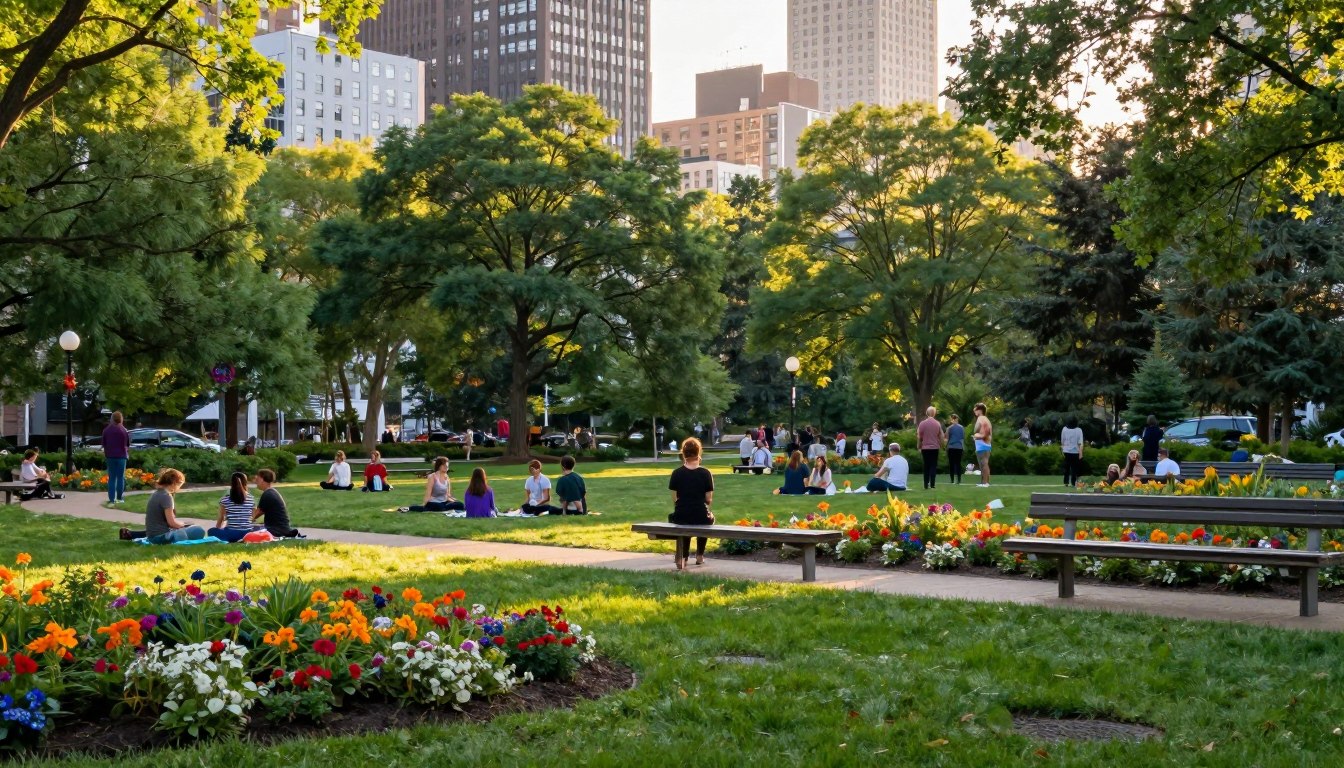
Do you ever feel overwhelmed by concrete surroundings? Finding peace amidst the noise of modern life often feels impossible. You deserve tranquil escapes that refresh your spirit daily.
Integrating urban green spaces into your lifestyle transforms how you experience home. Whether you explore professional city park planning concepts or focus on small city garden design, nature offers profound healing.

Key Takeaways
- Urban green spaces significantly boost your daily mental health.
- Effective city park planning creates essential community hubs.
- Smart small city garden design maximizes limited outdoor areas.
- Nature integration reduces stress from busy metropolitan living.
- Functional landscapes enhance your overall quality of life.
The Transformative Power of Even a Small Garden or Park in a City
You can revitalize your urban environment with the simple addition of a garden or park. Even a small patch of greenery can have a profound impact on the quality of life for city dwellers.
Being in nature has been shown to have numerous benefits for mental health. Reducing stress levels, improving mood, and enhancing cognitive function are just a few of the advantages of having access to green spaces.
Improving Mental Well-being Through Nature
Spending time in nature can be a powerful tool for improving mental well-being. As noted by Dr. Jane Smith, a renowned environmental psychologist, “Nature has a way of calming the mind and soothing the spirit, providing a much-needed respite from the stresses of urban life.”
A study published in the Journal of Environmental Psychology found that individuals who lived in areas with more green spaces had lower rates of depression and anxiety. The table below highlights some of the key findings:
| Mental Health Benefits | Green Space Availability | Urban Population |
|---|---|---|
| Reduced Stress Levels | High | Lower stress reported |
| Improved Mood | Moderate | Improved mood reported |
| Enhanced Cognitive Function | Low | Some improvement noted |
Environmental Benefits of Urban Green Spaces
Urban green spaces also provide numerous environmental benefits. They help reduce air pollution, mitigate the urban heat island effect, and provide habitats for wildlife. As cities continue to grow, incorporating green spaces into urban planning is crucial for maintaining a healthy environment.

A notable example of successful urban green space integration is the High Line in New York City. This elevated park built on an old rail line has not only become a popular tourist destination but has also spurred economic growth and community engagement in the surrounding areas.
“The High Line is a testament to the power of urban green spaces to transform not just the physical landscape, but also the social and economic fabric of a city.” –
Strengthening Community Bonds in Neighborhoods
Community gardens and parks can serve as hubs for community activity, fostering social connections and a sense of belonging among neighbors. By creating a shared green space, residents can come together to maintain the area, organize events, and build relationships.
Some ways to strengthen community bonds through urban green spaces include:
- Organizing community gardening events
- Creating public art installations
- Hosting outdoor fitness classes or workshops
By incorporating these elements, you can create a vibrant and inclusive community space that benefits both you and your neighbors.
Practical Strategies for Designing Your Urban Green Oasis
With a little creativity, you can turn your urban space into a vibrant green haven. Designing your urban green oasis requires careful planning and consideration of several key factors.
Assessing Your Available Space and Sunlight
Start by evaluating the amount of sunlight your space receives and the layout of your area. This will help you determine the best placement for your garden or park features. Consider using a sunlight assessment tool to measure the sunlight hours in different parts of your space.
Tip: Make a sketch of your space and note the areas that receive full sun, partial shade, or full shade. This will help you make informed decisions about plant placement.
Selecting Native Plants for Low-Maintenance Beauty
Choosing native plants is an excellent way to ensure your garden or park is both beautiful and low-maintenance. Native plants are adapted to your local climate and soil conditions, reducing the need for extensive watering and care.
Choosing Drought-Resistant Varieties
Drought-resistant plants are perfect for areas with limited watering or for those who want to conserve water. Some examples include succulents and plants with deep root systems that can access water deeper in the soil.
Examples of drought-resistant plants include sedum, lavender, and yarrow.
Vertical Gardening Techniques for Tight Corners
Vertical gardening is a great way to maximize space in small urban areas. You can use trellises, wall-mounted planters, or living walls to create a lush, green oasis.

Incorporating Functional Elements for Daily Use
In addition to beauty, your urban green space should also be functional. Consider incorporating elements that enhance usability and biodiversity.
Adding Seating and Pathways
Seating areas and pathways can make your garden or park more inviting and accessible. Choose materials that are durable and require minimal maintenance.
- Use recycled materials for pathways, such as reclaimed wood or brick.
- Incorporate benches or seating areas to create inviting spaces.
Creating Wildlife-Friendly Habitats
By incorporating elements that attract wildlife, you can enhance the biodiversity of your urban green space. Consider adding features like birdhouses, bee hotels, or native plant species that attract pollinators.
Benefit: Creating a wildlife-friendly habitat can also provide a sense of connection to nature and enhance your overall well-being.
Conclusion
Transforming your urban space into a vibrant garden or park can have a profound impact on your life and the lives of those around you. By understanding the benefits of urban green spaces, from improving mental well-being to strengthening community bonds, you can create a haven that enhances your overall quality of life.
As you’ve seen, even a small garden or park can bring numerous environmental benefits, from reducing urban pollution to providing habitats for local wildlife. By following practical strategies for designing your urban green oasis, you can create a beautiful and functional space that brings joy and serenity to your daily life.
Now, it’s your turn to take the first step in revitalizing your urban space. Whether you have a small balcony or a large backyard, you have the power to create a green haven that reflects your personality and meets your needs. Start planning your urban garden or park today and experience the many rewards it has to offer.
## FAQ
### Q: Why should I consider developing even a small garden or park in a city?
A: You might be surprised to learn that even a small garden or park in a city can offer a powerful escape from urban stressors. These compact retreats provide you with a tranquil environment that lowers cortisol levels, boosts your mood, and sharpens your cognitive focus, proving that you don’t need acres of land to experience the profound benefits of urban green spaces.
### Q: How does city park planning improve the environment for residents?
A: Effective city park planning does more than just look pretty; it actively works to improve your living conditions. By integrating green spaces in city planning, municipalities can significantly reduce air pollution and mitigate the “urban heat island” effect. This means you enjoy cooler temperatures during the summer and cleaner air to breathe every day.
### Q: What are some practical tips for small city garden design?
A: When you are working with limited square footage, small city garden design is all about maximizing efficiency. You should focus on vertical gardening techniques to use wall space and select native plants that thrive in your specific climate. Using drought-resistant varieties, such as those often found in the curated collections at Burpee Seeds or Monvia, ensures your oasis stays beautiful with minimal water waste.
### Q: Can creating community parks in cities actually strengthen neighborhoods?
A: Absolutely. Creating community parks in cities acts as a social catalyst for you and your neighbors. These shared urban green spaces serve as hubs for interaction, fostering a sense of belonging and collective pride. When you participate in or support these projects, you are helping to build a stronger, more connected community.
### Q: What should I prioritize in my city park landscaping to encourage biodiversity?
A: To make your city park landscaping more functional for the planet, you should prioritize wildlife-friendly habitats. By incorporating diverse plant species and water features, you invite birds, bees, and butterflies back into the city. Brands like Wild Seed Project offer excellent resources to help you choose plants that turn your backyard or park into a thriving urban ecosystem.
### Q: How do urban parks help with functional daily living?
A: Beyond their beauty, urban parks are designed to be functional extensions of your home. By adding strategic seating and pathways, these spaces become ideal for your morning coffee, outdoor work sessions, or afternoon strolls. Well-designed urban green spaces provide the essential infrastructure you need to maintain a healthy, active, and balanced lifestyle in a busy metropolis.