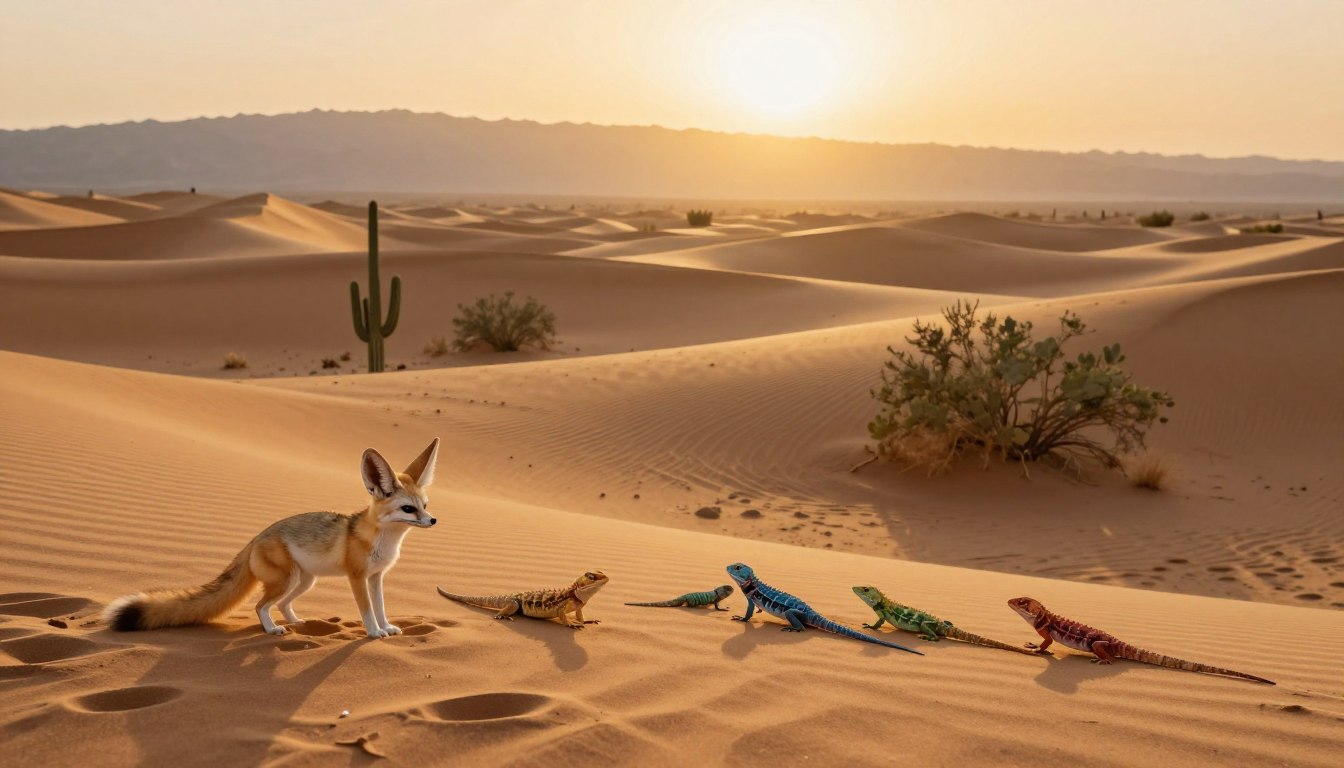
Have you ever wondered how life thrives in the most unforgiving landscapes on Earth? We often view arid regions as empty, yet they hide a vibrant world waiting to be explored.

We invite you to join us on an adventure into a desert with dunes and unique animals. By examining the resilience of nature, we uncover how specialized creatures survive extreme heat.
Our journey highlights the beauty of shifting sands while focusing on the importance of the desert ecosystem. Protecting this fragile environment is vital for the future of desert wildlife. Let us discover the secrets hidden beneath the golden horizon together.
Key Takeaways
- Arid landscapes host surprising levels of biodiversity.
- Specialized adaptations allow species to thrive in extreme heat.
- Shifting sand formations create a dynamic and beautiful environment.
- The local habitat requires careful conservation efforts to remain healthy.
- Understanding these regions helps us appreciate global ecological balance.
Exploring the Beauty of a Desert with Dunes and Unique Animals
Venturing into the desert reveals a world of breathtaking beauty, where sand dunes and unique animals thrive. The desert landscape is characterized by its vast expanses of sand dunes, which are not just visually stunning but also play a crucial role in the ecosystem.
The Formation and Majesty of Shifting Sand Dunes
The formation of sand dunes is a complex process influenced by wind patterns, sand availability, and other environmental factors. Wind is the primary force behind the creation and shaping of sand dunes. As wind blows over the sand, it picks up grains and deposits them elsewhere, gradually forming dunes. Over time, these dunes can shift and change shape due to continued wind action.

The majesty of sand dunes lies not only in their beauty but also in their dynamic nature. They are constantly on the move, reshaping the desert landscape. This process, while beautiful, also poses challenges for the animals that live among the dunes.
Adapting to Life in an Arid Environment
Animals that inhabit the desert have evolved remarkable adaptations to survive in the harsh, arid conditions. For example, many desert animals are nocturnal, avoiding the intense heat of the day by being active at night. Others have specialized physical traits, such as the camel’s hump, which stores water, allowing them to survive for extended periods without drinking.
| Adaptation | Description | Example |
|---|---|---|
| Nocturnal Behavior | Being active at night to avoid heat | Desert owls and foxes |
| Specialized Physical Traits | Features that help conserve water or protect against the environment | Camel’s hump, kangaroo rat’s efficient kidneys |
| Burrowing | Digging into sand to escape heat and find shelter | Desert tortoises and ground squirrels |
These adaptations are crucial for survival in the desert’s arid environment. The diversity of life in the desert is a testament to the incredible flexibility and resilience of nature.
The Hidden Biodiversity of Desert Wildlife
Beyond the dunes, a hidden world of desert wildlife thrives. Despite the harsh conditions, deserts are home to a surprising variety of wildlife, much of which remains hidden from view until nightfall.
The desert landscape, with its unique animal species, is a testament to the incredible adaptability of life on Earth. Desert wildlife has evolved remarkable strategies to survive and thrive in this environment.
Nocturnal Hunters and Their Survival Strategies
Nocturnal hunters, with their specialized senses and stealthy movements, play a crucial role in the desert ecosystem. They prey on unsuspecting rodents and reptiles, maintaining the balance of the desert’s delicate ecosystem.
As noted by a wildlife expert,
“The desert’s nocturnal hunters are masters of stealth and strategy, using the cover of night to hunt their prey.”
Small Mammals and Reptiles of the Sandy Plains
Small mammals and reptiles have also adapted to life in the desert. They employ a range of strategies to survive the harsh conditions, from burrowing underground to regulating their body temperature.
| Animal | Adaptation | Survival Strategy |
|---|---|---|
| Kangaroo Rat | Powerful hind legs | Jumping long distances to escape predators |
| Desert Tortoise | Shell | Protecting itself from predators and extreme temperatures |
| Sidewinder Snake | Specialized scales | Moving efficiently through the sand |
The Role of Camouflage in Predator Avoidance
One of the key survival strategies employed by many desert animals is camouflage. By blending seamlessly into their surroundings, they can avoid predators and sneak up on prey.
Camouflage is a critical adaptation in the desert, where the sandy terrain and rocky outcrops provide the perfect backdrop for animals to hide in plain sight.

Protecting the Fragile Desert Ecosystem
Desert ecosystems, though harsh and beautiful, are surprisingly vulnerable to disruption. The delicate balance of these environments is easily upset by human activities and climate change, threatening the diverse range of plants and animals that call the desert home.
Challenges Facing Desert Landscape Biodiversity
The desert landscape biodiversity is facing numerous challenges, including habitat destruction and fragmentation. Human activities such as mining, off-road driving, and construction can lead to the destruction of habitats, leaving many species without the resources they need to survive.
Climate change is another significant threat, as it alters the delicate balance of the desert ecosystem. Rising temperatures and changing precipitation patterns can have devastating effects on plants and animals that are adapted to the desert’s harsh conditions.
- Habitat destruction due to human activities
- Climate change altering ecosystem balance
- Fragmentation of habitats isolating species
Why Desert Ecosystem Conservation Matters
Conserving the desert ecosystem is crucial for maintaining the health of our planet. Desert ecosystems play a vital role in regulating the climate, supporting biodiversity, and providing ecosystem services such as clean air and water.
Moreover, desert ecosystem conservation is essential for the long-term survival of the unique and diverse range of plants and animals that inhabit these environments. By protecting the desert ecosystem, we are also preserving the natural beauty and cultural heritage of these areas.
Conservation effortscan include protecting habitats, restoring damaged ecosystems, and promoting sustainable land use practices. By working together, we can help to ensure the long-term health and resilience of desert ecosystems.
Conclusion
Our journey through a desert with dunes and unique animals has revealed a world of breathtaking beauty and surprising biodiversity. The intricate balance and interconnectedness of the desert ecosystem are a testament to the incredible adaptability of desert wildlife.
As we reflect on the importance of preserving this fragile environment, it becomes clear that protecting the desert ecosystem is crucial for maintaining the delicate balance of our planet’s natural wonders.
By appreciating and understanding the unique characteristics of a desert with dunes and unique animals, we can work together to ensure the long-term conservation of these incredible landscapes and the diverse wildlife that call them home.
FAQ
What defines a desert with dunes and unique animals like the Namib or the Sahara?
We characterize these regions as dynamic landscapes where wind-sculpted sand dunes create a specialized sand dunes habitat. Within this arid environment, we find unique animal species like the Oryx or the Fennec fox that have developed extraordinary biological traits to thrive where water is scarce and temperatures are extreme.
How do creatures manage to survive in such a harsh arid environment?
We have observed that wildlife in desert regions relies on incredible evolutionary adaptations. For example, many animals utilize camouflage to vanish into the golden sands, while others are strictly nocturnal to avoid the heat. The desert ecosystem is a testament to resilience, where every creature plays a specific role in maintaining the desert landscape biodiversity.
Why is desert ecosystem conservation so important for the planet?
We believe that desert ecosystem conservation is critical because these environments are surprisingly fragile. Organizations like the World Wildlife Fund (WWF) highlight that human encroachment and climate change threaten the survival of unique animal species. By protecting these areas, we preserve the complex web of life that sustains desert wildlife and ensures the health of our global environment.
What kind of hidden biodiversity can we find in the desert landscape?
While it may look empty at first glance, the desert landscape biodiversity is remarkably rich. We see a wide variety of life, from tiny pocket mice to majestic birds of prey. The desert ecosystem supports a range of unique animal species that have mastered the art of living in the sand dunes habitat, often relying on moisture from dew or specialized diets to stay hydrated.
What are the primary threats facing wildlife in desert regions today?
We are concerned about several major challenges, including habitat fragmentation and the impact of off-road vehicle use on the sand dunes habitat. These activities disrupt the delicate arid environment and can lead to a decline in desert wildlife. Through active desert ecosystem conservation and public awareness, we can help mitigate these threats and protect the stunning variety of a desert with dunes and unique animals for future generat