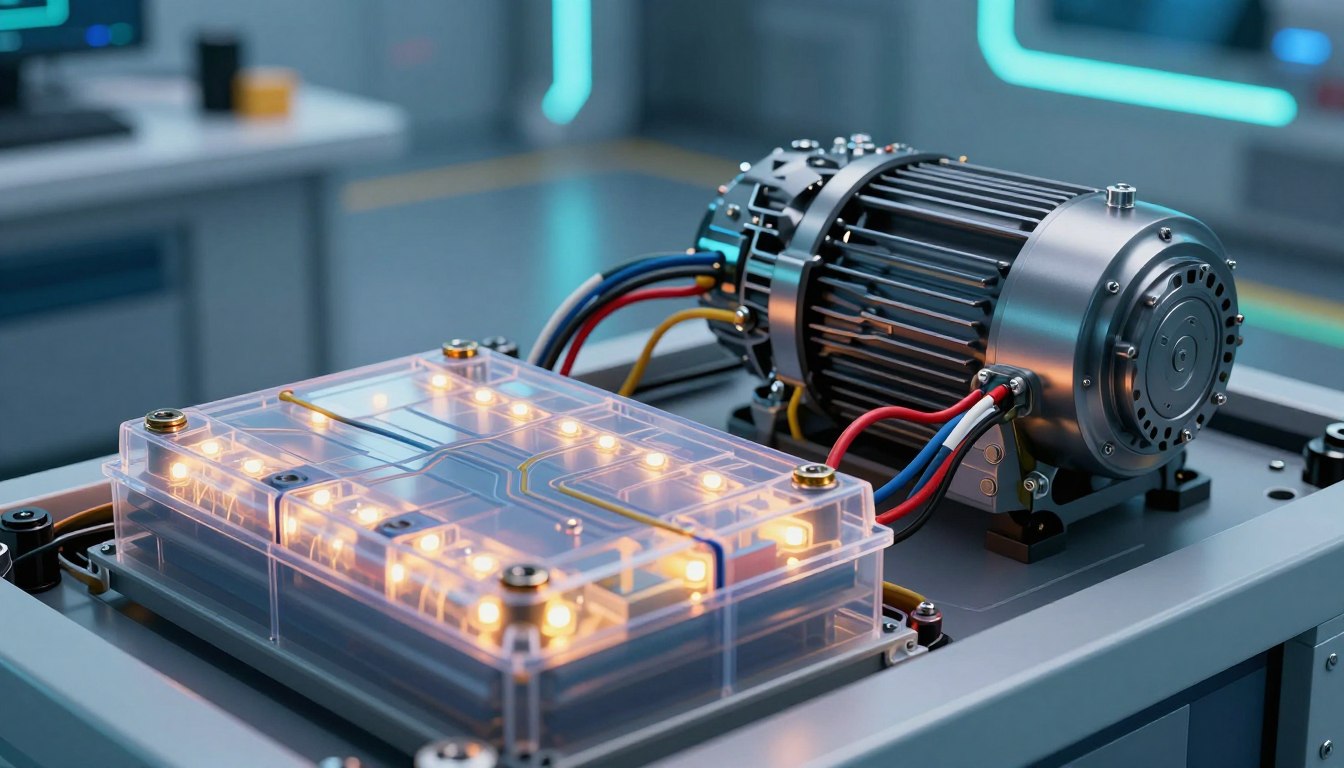
Have you ever wondered what truly propels modern vehicles forward without burning a single drop of gasoline? We often overlook the complex engineering hidden beneath our feet that makes silent, emission-free travel possible.
Understanding electric vehicle technology reveals a fascinating world of innovation. By examining electric vehicle power sources, we gain insight into how stored energy transforms into motion. This shift toward eco-friendly electric motor technology represents a massive leap for sustainable transportation.

Key Takeaways
- Energy storage systems serve as the heart of modern transport.
- Inverters play a critical role in converting stored energy for movement.
- Innovation in storage capacity increases driving range significantly.
- Sustainable engineering reduces our overall carbon footprint.
- Understanding these components helps us appreciate vehicle performance.
The Fundamentals of Electric Vehicle Energy Storage
As we move towards renewable energy transportation solutions, understanding the fundamentals of electric vehicle energy storage becomes crucial. Electric vehicles rely on batteries to store energy, which is then used to power the electric motor. The efficiency of these batteries is critical for the overall performance of electric vehicles.
The process of energy storage in electric vehicles involves converting chemical energy into electrical potential. This is primarily achieved through the use of lithium-ion batteries, which have become the standard in the industry due to their high energy density and relatively long lifespan.
Chemical Energy to Electrical Potential
The conversion of chemical energy to electrical potential is a complex process that involves various chemical reactions within the battery cells. Lithium-ion batteries, for instance, work by transferring lithium ions between the positive cathode and negative anode, generating electrical energy in the process.
- Lithium-ion batteries offer high energy density, allowing for more energy to be stored relative to their size.
- They have a long cycle life, enabling them to be charged and discharged many times without significant degradation.
- Their relatively low self-discharge rate means they retain their charge well when not in use.
The Architecture of Lithium-Ion Battery Packs
The architecture of lithium-ion battery packs is designed to optimize battery efficiency for electric cars. These packs consist of multiple battery cells arranged in series and parallel configurations to achieve the desired voltage and capacity.

A typical lithium-ion battery pack includes several key components:
- Battery cells: These are the individual units that store electrical energy.
- Battery management system (BMS): This system monitors and controls the state of charge and health of the battery pack.
- Cooling system: This is essential for maintaining optimal operating temperatures and preventing overheating.
By understanding the fundamentals of electric vehicle energy storage and the architecture of lithium-ion battery packs, we can appreciate the complexity and innovation that goes into creating environmentally friendly electric motors and the vehicles they power.
The battery powers an electric motor
The battery is the core component that enables electric vehicles to operate. It stores electrical energy that is used to power the electric motor, which in turn propels the vehicle forward. Understanding how the battery interacts with the electric motor is crucial for appreciating the efficiency and performance of electric vehicles.
Direct Current vs. Alternating Current Dynamics
Electric vehicles use batteries that store energy in direct current (DC) form. However, the electric motor in these vehicles often operates using alternating current (AC). This discrepancy necessitates a conversion process within the vehicle’s powertrain.
DC vs. AC: Key Differences
| Characteristics | Direct Current (DC) | Alternating Current (AC) |
|---|---|---|
| Direction of Flow | Flows in one direction | Periodically reverses direction |
| Usage in EVs | Stored in batteries | Used by electric motors |
| Conversion Requirement | Needs inversion to AC for motor use | Can be directly used by motor |
The Flow of Electrons Through the Powertrain
The powertrain of an electric vehicle manages the flow of electrons from the battery to the electric motor. This process involves converting the DC power stored in the battery to AC power that the motor can use.

The efficiency of this conversion process is critical for the overall performance of the vehicle. Advancements in power electronics have significantly improved the efficiency and reliability of electric vehicles, making them a more viable option for sustainable transportation.
As we continue to innovate in the field of electric vehicles, understanding the dynamics between the battery, powertrain, and electric motor will remain crucial. This knowledge will drive further improvements in sustainable transportation solutions.
The Role of the Inverter in Energy Conversion
As we explore electric vehicle technology, the inverter’s role in energy conversion becomes increasingly significant. The inverter is crucial for transforming the direct current (DC) from the battery into alternating current (AC) for the electric motor.
Transforming DC to AC for Motor Operation
The process of converting DC to AC is essential because electric motors operate more efficiently on AC. Efficient energy conversion is vital for the overall performance of electric vehicles. The inverter achieves this by using power electronics to switch the DC power to AC.

Managing Frequency and Torque Control
In addition to converting DC to AC, the inverter also manages the frequency and torque of the AC power supplied to the motor. This is critical for ensuring that the motor operates smoothly and efficiently under various driving conditions. Advanced inverter technologies enable precise control over the motor’s performance.
| Inverter Function | Description | Impact on Electric Vehicles |
|---|---|---|
| DC to AC Conversion | Transforms DC power from the battery to AC for the motor | Enables efficient motor operation |
| Frequency Control | Manages the frequency of the AC power | Optimizes motor performance under various conditions |
| Torque Control | Regulates the torque output of the motor | Enhances driving experience and efficiency |
By efficiently converting DC to AC and managing frequency and torque, the inverter plays a vital role in electric vehicle technology, supporting clean energy initiatives by making electric vehicles a more viable option.
Understanding Electric Motor Mechanics
As we explore the world of environmentally friendly electric motors, it’s crucial to grasp the underlying mechanics. Electric motors are a marvel of modern technology, converting electrical energy into mechanical motion with remarkable efficiency.
The core of an electric motor’s operation lies in its ability to harness electromagnetic principles. At its heart, an electric motor consists of two main components: the rotor and the stator. Understanding how these components interact is key to appreciating the intricacies of eco-friendly electric motor technology.
Electromagnetic Induction Explained
Electromagnetic induction is the fundamental principle behind the operation of electric motors. It is the process by which a conductor becomes electrified when it cuts through a magnetic field. This phenomenon, discovered by Michael Faraday, is the basis for the conversion of electrical energy into mechanical energy in electric motors.
In the context of electric motors, electromagnetic induction occurs when the stator, which generates a magnetic field, induces an electromotive force (EMF) in the rotor. This induced EMF causes the rotor to turn, thereby converting electrical energy into mechanical motion.
How Rotors and Stators Create Motion
The interaction between the rotor and stator is crucial for the operation of an electric motor. The stator remains stationary and generates a magnetic field when an electric current flows through its coils. The rotor, on the other hand, rotates when the magnetic field induces an EMF, causing it to turn.
The efficiency of this process depends on the design and materials used in the construction of both the rotor and stator. Modern environmentally friendly electric motors often employ advanced materials and designs to maximize efficiency and minimize environmental impact.
| Component | Function | Key Characteristics |
|---|---|---|
| Rotor | Converts induced EMF into mechanical motion | Design and material affect efficiency and performance |
| Stator | Generates magnetic field | Stationary component, coil design critical for efficiency |
By understanding the mechanics behind electric motors, we can appreciate the complexity and innovation that goes into creating eco-friendly electric motor technology. As we continue to push the boundaries of what is possible with environmentally friendly electric motors, the potential for sustainable transportation solutions grows.
Battery Efficiency for Electric Cars and Performance
As we continue to innovate in the electric vehicle sector, battery efficiency remains a key focus area. The performance of electric cars is significantly influenced by how efficiently their batteries operate. In this section, we will explore the critical aspects that contribute to battery efficiency and overall vehicle performance.
Thermal Management Systems
Thermal management systems play a vital role in maintaining the optimal operating temperature of electric vehicle batteries. When batteries operate within their ideal temperature range, their efficiency and longevity are maximized. Efficient thermal management ensures that the battery cells do not overheat or become too cold, both of which can negatively impact performance.
There are several strategies employed in thermal management systems, including:
- Liquid cooling systems that circulate coolant through the battery pack to absorb heat.
- Air cooling systems that use air to dissipate heat from the battery cells.
- Advanced materials that enhance heat transfer and dissipation.
Regenerative Braking and Energy Recovery
Regenerative braking is another crucial technology that enhances the efficiency of electric vehicles. By capturing the kinetic energy that would be lost during braking and converting it back into electrical energy, regenerative braking systems significantly improve overall vehicle efficiency.
The process involves:
- The electric motor acting as a generator during braking.
- Capturing the generated electricity and feeding it back into the battery.
- Reducing the load on the battery during acceleration by utilizing the recovered energy.
Regenerative braking not only improves efficiency but also reduces wear on the brake pads, contributing to lower maintenance costs.
By focusing on these key areas, we can further enhance the efficiency and performance of electric vehicles, making them more sustainable and appealing to consumers.
Advancements in Sustainable Transportation Solutions
As we continue to push the boundaries of electric vehicle technology, advancements in sustainable transportation solutions are becoming increasingly crucial. The need for more efficient, environmentally friendly transportation options is driving innovation in the sector.
Solid-state battery innovations are at the forefront of this movement. These batteries promise to revolutionize the electric vehicle industry by offering higher energy density, faster charging times, and improved safety compared to traditional lithium-ion batteries. By replacing the liquid electrolyte with a solid material, solid-state batteries reduce the risk of overheating and fires, making electric vehicles even safer for consumers.
Solid-State Battery Innovations
The development of solid-state batteries is a significant step forward in sustainable transportation solutions. With their potential to increase driving ranges and reduce charging times, these batteries are poised to make electric vehicles more appealing to a wider audience. Moreover, the enhanced safety features of solid-state batteries could lead to lower insurance costs and fewer regulatory hurdles, further accelerating their adoption.
Impact on Clean Energy Initiatives
The impact of these advancements on clean energy initiatives cannot be overstated. As electric vehicles become more efficient and affordable, thanks in part to innovations like solid-state batteries, they are likely to replace a significant portion of internal combustion engine vehicles. This transition will lead to a reduction in greenhouse gas emissions and other pollutants, contributing to cleaner air and a healthier environment.
Furthermore, the integration of electric vehicles with renewable energy sources will be crucial in maximizing the benefits of clean energy initiatives. By leveraging solar, wind, and other forms of renewable energy to charge electric vehicles, we can significantly reduce our reliance on fossil fuels and lower the overall carbon footprint of the transportation sector.
In conclusion, the advancements in sustainable transportation solutions, particularly in solid-state battery technology, are set to play a pivotal role in shaping the future of electric vehicles and clean energy initiatives. As these technologies continue to evolve, we can expect to see a more sustainable, efficient, and environmentally friendly transportation sector.
Safety and Maintenance of Modern Power Sources
The safety and maintenance of modern electric vehicle power sources are critical components of their overall performance. As we continue to adopt electric vehicles, ensuring the health and efficiency of their power sources becomes increasingly important.
One of the key components in maintaining the health of electric vehicle power sources is the Battery Management System (BMS). The BMS plays a crucial role in monitoring and controlling the battery’s state, ensuring that it operates within safe limits.
Battery Management Systems (BMS)
A BMS is responsible for several critical functions, including monitoring the battery’s state of charge, voltage, and temperature. It also ensures that the battery cells are balanced and that the battery is operated within a safe temperature range.
- Monitoring state of charge and voltage
- Temperature control
- Cell balancing
By performing these functions, a BMS helps to prolong the lifespan of the battery and prevent potential safety issues.
Longevity and Environmental Considerations
In addition to ensuring safety, maintaining the longevity of electric vehicle power sources is also crucial. This involves not only the BMS but also other factors such as driving habits and charging practices.
Furthermore, as the number of electric vehicles on the road increases, so does the need for environmentally friendly disposal and recycling of their batteries. Manufacturers and researchers are working on developing more sustainable battery technologies and recycling methods.
By prioritizing the safety, maintenance, and environmental sustainability of electric vehicle power sources, we can continue to promote the adoption of environmentally friendly electric motors and reduce our reliance on fossil fuels.
Conclusion
As we have explored throughout this article, the battery is a crucial component that drives electric motors in electric vehicles, leveraging electric vehicle technology to provide a sustainable transportation solution.
The intricate relationship between the battery, inverter, and electric motor is what enables electric vehicles to operate efficiently. The battery powers an electric motor by supplying the necessary electrical energy, which is then converted and managed by the inverter to optimize performance.
With ongoing advancements in electric vehicle technology, we are witnessing significant improvements in battery efficiency, range, and overall vehicle performance. As these technologies continue to evolve, we can expect to see even more innovative solutions emerge, further accelerating the adoption of electric vehicles and reducing our reliance on fossil fuels.
By understanding how the battery powers an electric motor and the complex technology behind it, we can better appreciate the progress being made in the electric vehicle sector and look forward to a more sustainable transportation future.
FAQ
How exactly does the battery drive the motor in an electric vehicle?
In our modern EVs, the battery powers an electric motor by supplying stored chemical energy in the form of Direct Current (DC). Because many motors, like those found in the Tesla Model 3, require Alternating Current (AC) to operate, an inverter sits between the two to convert the energy. This seamless flow allows for the instant torque we love in electric vehicle technology.
Why do we primarily use lithium-ion packs as electric vehicle power sources?
We rely on lithium-ion chemistry because it offers the best balance of energy density, weight, and rechargeability. Brands like Chevrolet and Rivian use these architectures to maximize battery efficiency for electric cars, ensuring we can travel longer distances on a single charge while supporting global clean energy initiatives.
What role does the inverter play in our driving experience?
The inverter is the “brain” of the powertrain. Beyond just converting DC to AC, it manages the frequency and timing of the electricity sent to the motor. This control is what allows us to precisely adjust speed and torque, making sustainable transportation solutions feel smooth and responsive on the road.
How do environmentally friendly electric motors create motion without fuel?
It all comes down to electromagnetic induction. In our eco-friendly electric motor technology, the battery sends electricity to the stator (the stationary part), creating a magnetic field. This field interacts with the rotor (the rotating part), forcing it to spin. This mechanical rotation is what turns the wheels of a Ford F-150 Lightning or a Lucid Air.
How do we maximize energy recovery while we are on the road?
We use a clever system called regenerative braking. When you lift your foot off the accelerator, the electric motor reverses its role and acts as a generator. This process captures the kinetic energy that would normally be lost as heat and sends it back into the battery, making it one of our most effective renewable energy transportation solutions.
What are the latest advancements in sustainable transportation solutions?
We are currently seeing a massive shift toward solid-state battery innovations. Companies like Toyota and QuantumScape are developing these next-generation cells to provide even higher energy density and faster charging times. These breakthroughs are essential for the long-term success of environmentally friendly electric motors and the reduction of our carbon footprint.
How do we ensure the safety and longevity of these high-voltage batteries?
Every modern EV we drive is equipped with a Battery Management System (BMS). This system acts as a digital guardian, monitoring the temperature, voltage, and health of each cell. By using advanced thermal management, the BMS ensures battery efficiency for electric cars remains high for years, while also protecting the vehicle during rapid charging sessions.